
If you are planning to refinish the hardwood floors in your Metro Detroit home, the first thing you want to know is how long the whole project will take and how many days you will be stepping around wet floors.
For most homes, a standard sand and refinish job takes about three to five days, from the first pass of the sander to the point where the floors are dry enough to walk on. The exact timeline depends on the size of your space, the type of finish, the number of coats, and the weather outside your window.
Here is a realistic look at how long it takes to refinish hardwood floors, what happens on each day, and the local factors in Wayne, Oakland, and Macomb counties that can stretch or shorten that schedule.
The Short Answer
For a typical project covering a few rooms, here is what you can expect:
- Dust-free sand and three coats of clear finish: about 3 to 4 days
- Sand, stain, and finish: about 4 to 5 days
- Whole house or multiple levels: 5 to 7 days
- Full cure before rugs and heavy furniture: 2 to 4 weeks
Most homeowners can walk on their floors in socks within 24 hours of the final coat. Everything after that is about letting the finish harden fully before normal life moves back in.
How Long Does It Take to Refinish Hardwood Floors, Step by Step?
Breaking the job into days makes the timeline easier to plan around.
Day 1: Sanding and Prep
The crew clears the room, then sands the old finish down to bare wood using a drum or orbital sander, with a smaller edger for corners and along the baseboards. Gaps, nail holes, and minor damage get filled, and the floor is vacuumed clean. A dust-free sanding system keeps most of the fine wood dust out of your cabinets and vents. For a few rooms, this usually takes most of one day.

Day 2: Stain or First Coat
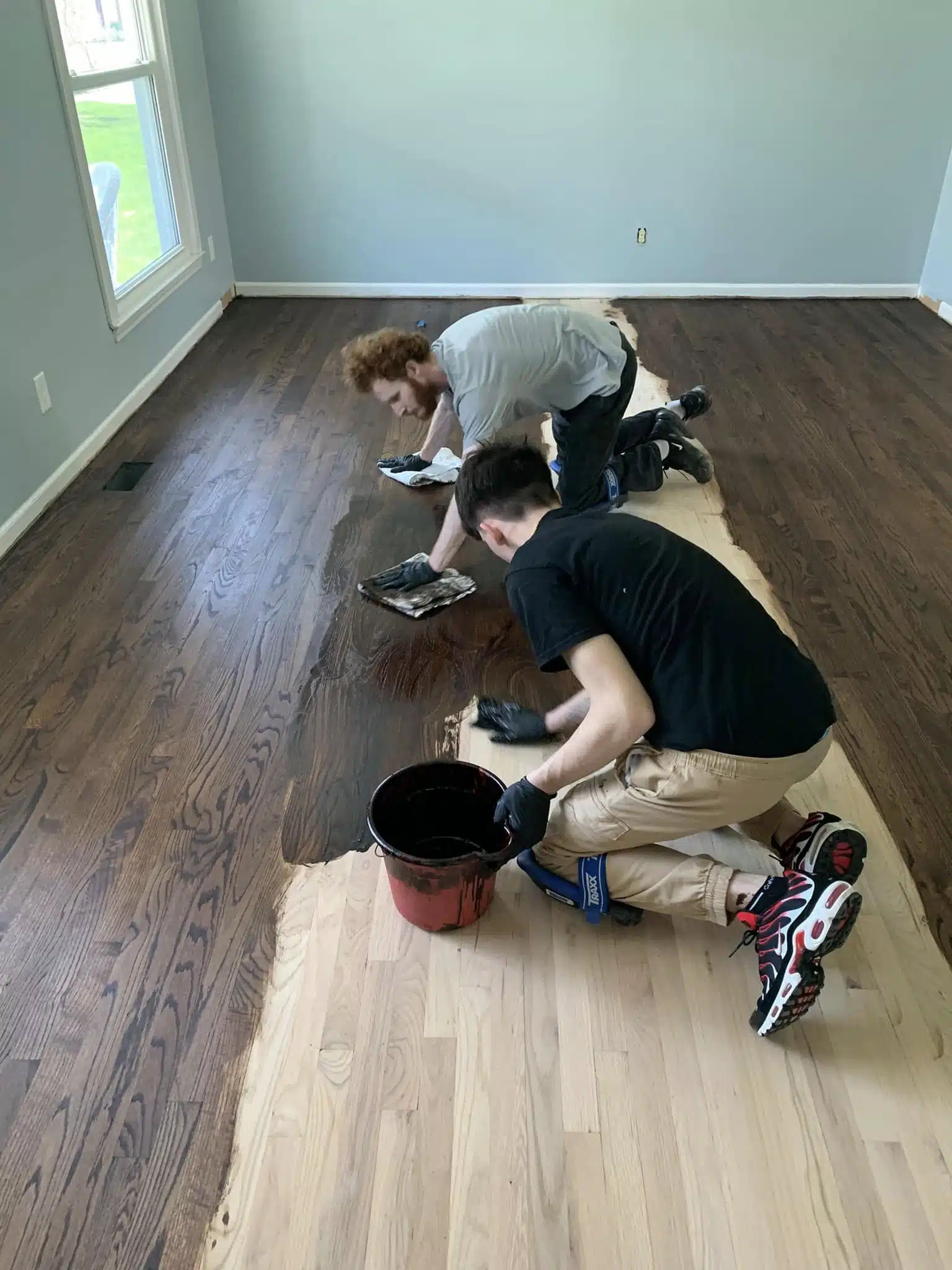
If you are adding a stain color, it goes on now and needs several hours to overnight to dry before any finish is applied. If you are keeping the natural wood tone, the first coat of polyurethane goes down instead. Staining is the main reason a project moves from a three-day job to a five-day one.
Day 3 and Beyond: Coats and Drying
Most floors get two to three coats of polyurethane. Each coat has to dry before the next one goes on, with a light buff in between for a smooth bond. This drying time is where the finish type and the Michigan weather have the biggest effect on your total timeline.
How Metro Detroit Weather Changes the Timeline
Polyurethane and stain cure by releasing moisture into the air, so humidity and temperature directly affect how fast each coat dries. Metro Detroit sits in a humid continental climate, which means the season you choose matters.
- Summer humidity: July and August bring high humidity and dew points across the Detroit area, helped along by the Great Lakes. Damp air slows drying between coats, so running the air conditioning or a dehumidifier keeps the project on track.
- Winter heating: From December through February, furnaces run around the clock and indoor air gets very dry. Finishes can dry quickly, though that same dry air makes the wood contract, so small seasonal gaps between boards are normal.
- Spring and fall: Milder temperatures and moderate humidity in April, May, September, and October usually give the most predictable drying times of the year.
A rainy spring stretch or a humid July week can add a day to the job, so it helps to build a little buffer into your plans rather than scheduling the movers for the morning after the last coat.
Oil-Based vs Water-Based Finish: Which Dries Faster?
The finish your crew uses can shift the whole schedule by a day or two.
- Water-based polyurethane dries in about two to four hours between coats, has a mild smell, and stays clear over time. A crew can often apply more than one coat in a single day, which shortens the overall project.
- Oil-based polyurethane needs roughly 24 hours between coats, has a stronger odor, and adds a warm amber tone that deepens with age. It is tough and time-tested, but it stretches the timeline.
If finishing quickly is your priority, water-based finish is usually the faster route. If you want that classic amber look on older oak, oil-based is worth the extra drying days.
When Can You Walk On and Use Your Floors?
Drying and curing are two different things. A floor can feel dry to the touch long before the finish has hardened all the way through. Here is a safe schedule to follow after the final coat:

- Socked feet: about 24 hours
- Shoes and pets: 24 to 48 hours
- Moving furniture back: wait 3 to 4 days and use felt pads
- Area rugs: wait 2 to 4 weeks so the finish can breathe and cure
Water-based finishes reach a full cure faster, often within two weeks, while oil-based finishes can take up to 30 days. Treating the floor gently during that window protects the work you just paid for.
Best Time of Year to Refinish in Metro Detroit
Spring and fall are the easiest seasons for predictable drying, and the milder weather lets you crack a window for ventilation while an oil-based finish cures. Summer works well as long as the air conditioning or a dehumidifier is running to hold down the humidity. Winter is a popular time for indoor projects too, since many families would rather be off the floors when they are stuck inside anyway. Just expect those seasonal gaps between boards while the furnace keeps the air dry.
How to Keep Your Project on Schedule
- Clear furniture, rugs, and breakables before the crew arrives.
- Plan to stay off the floors during the sanding and coating days, or arrange to be out of the house.
- Keep pets and kids away from fresh finish.
- Ask whether your crew uses water-based or oil-based finish so you know the drying windows.
- Book during spring or fall if your timing is flexible.
Planning Your Refinishing Project
Most Metro Detroit homeowners are walking on their floors within a few days and fully moved back in within a couple of weeks. Knowing the timeline ahead of time makes it easier to plan around the work, whether you are refreshing the oak in a 1950s brick ranch in Livonia or a century-old colonial in Royal Oak. If you want to plan the budget side as well, our guide to hardwood floor refinishing cost in Metro Detroit breaks down what to expect, and you can read more about the dustless refinishing process if the mess is your main concern.
