
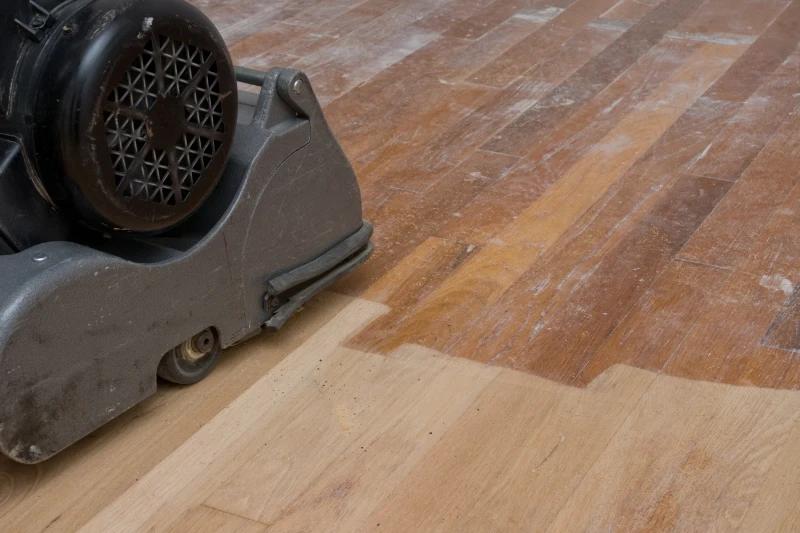
If you have engineered hardwood floors in your Metro Detroit home and they are starting to look tired, you are probably wondering whether you can sand them back to life or whether you are stuck replacing them. The short version is that you often can refinish engineered hardwood, but it depends on one thing more than any other: how thick the top layer of real wood is. Some engineered floors can be sanded and refinished two or three times. Others can only be buffed and recoated, and a few are too thin to touch with a sander at all.
Here is how to tell which group your floors fall into, what your options are, and why engineered flooring is so common in homes across Oakland and Macomb counties in the first place.

The Short Answer
Whether you can refinish an engineered floor comes down to the wear layer, which is the layer of real hardwood bonded to the top. Here is the quick guide:
- Thick wear layer (3mm or more): can usually be sanded and refinished two to three times
- Medium wear layer (2mm to 3mm): good for one full sand and refinish
- Thin wear layer (under 2mm): cannot be sanded safely, but a buff and recoat can still freshen it up
A single sanding removes roughly 0.5mm to 1mm of wood, so the thicker your wear layer, the more life your floor has left.
What “Engineered” Actually Means
Engineered hardwood is a real wood floor. The top is a genuine hardwood veneer, usually oak, maple, or hickory, bonded over a core of plywood or high-density fiberboard. That core is what makes engineered flooring more stable than solid wood when the air turns humid or dry, which is exactly why so many Metro Detroit builders used it through the 1990s and 2000s.
You will find it in newer subdivisions, finished basements, and condos across Novi, Canton, Macomb Township, and the surrounding suburbs, often installed over concrete slabs where solid hardwood would not hold up. Because the real wood sits only on top, refinishing works a little differently than it does with solid oak.
Can You Refinish Engineered Hardwood Floors? It Comes Down to the Wear Layer
The single question that decides everything is how much real wood sits above the core. Sanding removes a thin slice of that wood, so a floor with a generous wear layer can take a full refinish, while a thin one would sand straight through to the plywood.
How to Check Your Wear Layer
You do not need to guess. There are a few easy ways to find out:
- Pull up a floor vent register and look at the cut edge of a board, where you can usually see the solid wood veneer sitting on top of the layered core
- Check a doorway or transition where the edge of a board is exposed
- Look up the manufacturer and product name from any paperwork or leftover boxes, then check the spec sheet for the wear layer in millimeters
- Ask a flooring pro to measure it during an estimate if you are still unsure
When You Can Sand and Refinish
If your wear layer is 2mm or thicker and the boards are solid, a full sand and refinish is usually on the table. This is the route to take when:
- The finish is scratched, dull, or worn but the wood underneath is sound
- You want to change the stain color
- The floor has not already been sanded down to its limit
Done right, the result looks the same as refinishing solid hardwood, and it costs far less than tearing the floor out. If you are weighing the numbers, our guide to hardwood floor refinishing cost in Metro Detroit breaks down what to expect.

When to Recoat Instead of Sanding
If your wear layer is thin, or the finish is only lightly worn, a screen and recoat is the smarter move. Instead of sanding down to bare wood, a pro lightly buffs the existing finish and lays a fresh coat of polyurethane on top. It refreshes the look without removing any of that precious wear layer.
A recoat is faster, less messy, and easier on your schedule, which makes it a popular winter project in Michigan when everyone is indoors anyway. The tradeoff is that it will not remove deep scratches or change the color, since it is a surface refresh rather than a full reset.

Signs Your Engineered Floor Cannot Be Refinished
Sometimes replacement really is the only answer. Watch for these red flags:
- The veneer has worn through and you can see the plywood core or a lighter color showing in traffic paths
- Deep gouges or dents that reach past the wear layer
- The floor has already been refinished once or twice and the top layer is nearly gone
- Water damage or lifting boards, which show up often in below-grade basements or near entryways where Michigan snow and road salt get tracked in
If you are seeing these across much of the floor, refinishing will not fix the underlying problem.
Water damage is worth tracing before you write the floor off, because the source is usually higher up than the boards. A slow roof leak can soak into the subfloor long before a stain ever reaches the ceiling, so if your home has a history of roof trouble, a roof repair is the first fix that protects whatever flooring goes down next.
How Metro Detroit’s Climate Factors In
Engineered flooring earns its keep in this part of Michigan. Our humid continental climate swings from damp, sticky summers to cold, furnace-dry winters, and solid hardwood can cup or gap with those shifts. The layered core of engineered flooring holds its shape better, which is why it shows up so often over slabs and in basements here.
When it is time to refinish or recoat, the same weather rules apply as with any wood floor. High summer humidity slows the finish between coats, so running the air conditioning or a dehumidifier helps, while dry winter air lets coats cure quickly. For a full breakdown of timing, see our guide on how long it takes to refinish hardwood floors in Metro Detroit.
Refinish, Recoat, or Replace?
A quick way to decide:
- Refinish (full sand) if your wear layer is 2mm or more and you want to fix scratches or change color
- Recoat (buff and reseal) if the wear layer is thin or the finish is only lightly worn
- Replace if the veneer is worn through, the boards are water damaged, or the floor has already been sanded to its limit
What to Do Next
Start by checking your wear layer, since that one measurement answers most of the question. If you are not sure what you are looking at, have a flooring pro take a look before you commit to anything. A full sanding is not always necessary, and in many Metro Detroit homes a simple recoat buys years of extra life. If the mess is your main worry, you can also read about the dustless refinishing process.
